Discussing Crony Capitalism
On April 27, Acting SEC Chairman Michael Piwowar led an engaging discussion about the rise of crony capitalism in recent years, especially as a result of the Dodd-Frank Act. He explained who are the winners and losers under the new regulatory regime, efforts by special interests to pursue their policy agendas through SEC disclosure rules, and unintended consequences of rules such as the conflict-free minerals disclosure rule.
Piwowar fielded questions on a host of topics including financial-markets regulation, the role of the SEC, and the competitiveness of the U.S. economy. A Georgetown MBA himself, Piwowar concluded with thoughts on how students could get the most out their degree and prepare for future career success.
About the Speaker
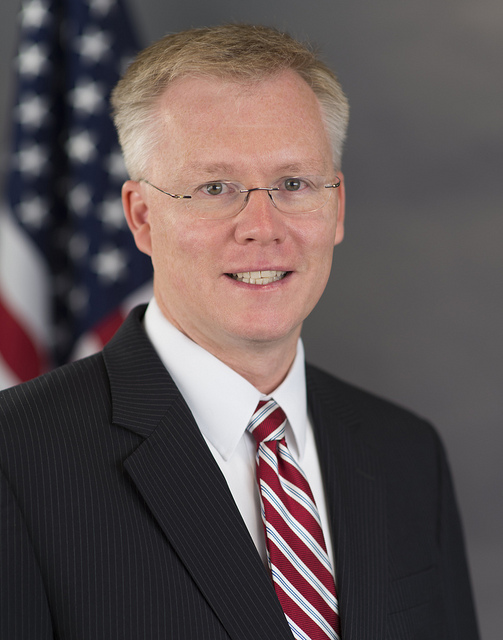 Michael S. Piwowar was designated Acting Chairman of the U.S. Securities and Exchange Commission (SEC) by President Donald Trump on January 23, 2017. Dr. Piwowar was first appointed to the Commission by President Barack Obama and was sworn in on August 15, 2013.
Previously, Dr. Piwowar was the Republican chief economist for the U.S. Senate Committee on Banking, Housing, and Urban Affairs under Senators Mike Crapo (R-ID) and Richard Shelby (R-AL). He was the lead Republican economist on the four SEC-related titles of the Dodd-Frank Act and the JOBS Act. Dr. Piwowar also worked on a number of important SEC-related oversight issues under the jurisdiction of the Committee, such as securities, over-the-counter derivatives, investor protection, market structure, and capital formation. During the financial crisis and its immediate aftermath, Dr. Piwowar served in a one-year fixed-term position at the White House as a senior economist at the President’s Council of Economic Advisers (CEA) in both the George W. Bush and Barack Obama Administrations. While at the CEA, Dr. Piwowar also served as a staff economist for the Financial Regulatory Reform Working Group of the President’s Economic Recovery Advisory Board.
Dr. Piwowar received a B.A. in Foreign Service and International Politics from the Pennsylvania State University, an M.B.A. from Georgetown University, and a Ph.D. in Finance from the Pennsylvania State University.